El-Fasher Markers One Year of RSF Control With Ongoing Ransoms and Detentions
Survivors report that the Rapid Support Forces continue to detain men and demand payments of up to $3,000, while new evidence emerges of mass graves in nearby Bara.
By Oscar Fuentes ·
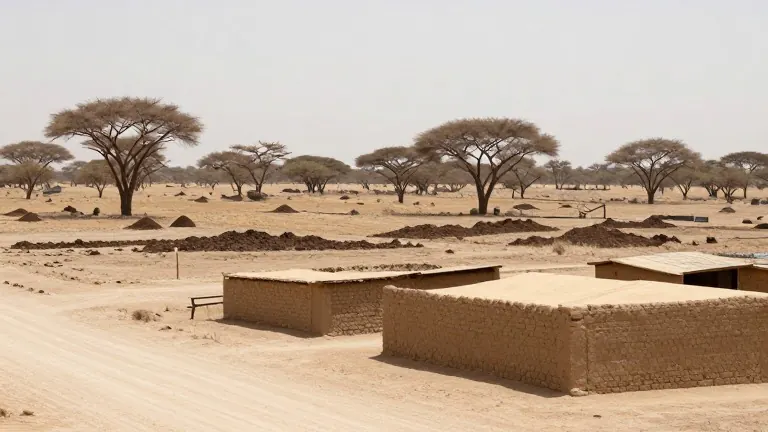
The capital of North Darfur has been under the control of the Rapid Support Forces since October 2025. One year later, residents who fled the city report that the violence persists through systematic detention and financial extortion.
A woman identified as Hala returned to el-Fasher three weeks ago from the Tawila refugee camp to retrieve personal documents. She stated that RSF fighters issued her a handwritten entry permit upon arrival. The next day, soldiers addressed her in the street with abusive language. Hala said she was spared a physical attack only because other civilians were present. "There is no security in el-Fasher at all," she told the campaign group Avaaz. She has since returned to Tawila and intends to stay.
The RSF began its final offensive on October 26, 2025, after a siege lasting more than 500 days. The assault followed a war between the RSF and the Sudanese Armed Forces that started in April 2023. Researchers at Yale's Humanitarian Research Lab compared the speed and scale of the killing to the Rwandan genocide. The United Arab Emirates, which is accused of supporting the RSF, continues to deny involvement in the conflict.
Survivors described executions and sexual violence during the takeover. Mohamed Hassan, a resident of el-Fasher, said fighters killed men they identified as soldiers from the army or its allied Joint Forces. Approximately 500 people died at the Saudi Maternity Hospital, which housed displaced families and medical staff. UN investigators also recorded mass killings at el-Fasher University, on exit routes, and at the defensive berms surrounding the city.
The total death toll remains uncertain. About 260,000 people were inside the city when the assault began. Monitoring groups using satellite imagery counted at least 6,000 dead in the first 72 hours. The RSF maintained a communications blackout and barred human rights investigators from entering. This week, volunteers in the North Kordofan town of Bara recovered more than 600 bodies from 200 mass graves. Witnesses said the victims were civilians killed during the October offensive.
Yale researchers identified 150 clusters of objects consistent with human remains between October 26 and November 28, 2025. Twenty of these sites showed signs of burning. Fifty-seven sites vanished entirely within four weeks. RSF leader Mohamed Hamdan Dagalo, known as Hemedti, announced an investigation into violations by his troops. A UN team entered the city under close supervision in December. They described the city as a crime scene and found that one in six screened individuals had severe acute malnutrition.
Conditions during the siege were severe. A doctor who worked in an el-Fasher hospital for nearly two years reported that generators ran for only two hours per night. Emergency surgeries were performed using phone flashlights. Supplies of antibiotics and surgical gauze depleted. The World Food Programme stated that residents survived on animal fodder and food waste. A UN fact-finding mission concluded in February that the RSF committed acts of genocide in el-Fasher. The US government and Amnesty International reached similar findings regarding Darfur.
Displacement continues to strain resources in the region. Tawila now hosts around 800,000 people, most from el-Fasher. Survivors say the RSF still detains fleeing men and demands ransoms of up to $3,000. Khadijah, an elderly woman originally from el-Geneina, said she lives under a tree on a farm with little food and no shelter. Mudathir Mohammed Diqourni of an el-Fasher resistance committee reported that RSF militias are destroying farms and killing farmers in South and Central Darfur.
The UN mission found reasonable grounds to believe that private companies and recruiters based in the UAE routed weapons through Chad, southeastern Libya, and Bosaso in Somalia. Mona Rishmawi, a member of the mission, said the supplies included weapons, drone-related equipment, logistical help, and personnel. The United States remains the top weapons supplier to the UAE, and British weaponry has been found on Sudanese battlefields.
Source: Middle East Eye